Full-Lifecycle Headless CMS Solutions We build search-engine-ready, composable, and API-first digital engines designed to publish content seamlessly across websites, mobile apps, IoT devices, and smart screens. Headless Architecture Strategy & Setup: Composable...
We build search-engine-ready, composable, and API-first digital engines designed to publish content seamlessly across websites, mobile apps, IoT devices, and smart screens.
Headless Architecture Strategy & Setup: Composable content modeling, schema definition, and taxonomy design across leading headless platforms (Contentful, Strapi, Sanity, Prismic, Storyblok).
Decoupled Monoliths (WordPress, Drupal, Magento): Transform traditional backends into headless content engines using WPGraphQL, Drupal JSON:API, or Adobe Commerce GraphQL endpoints.
Modern Frontend Engineering (SSG/SSR/ISR): Blazing-fast frontend development utilizing Next.js, Nuxt.js, React, Vue.js, and Astro deployed on global edge networks (Vercel, AWS CloudFront, Cloudflare Pages).
Custom REST & GraphQL API Development: High-throughput, low-latency middleware microservices connecting your CMS to proprietary databases, payment gateways, and authentication providers.
Enterprise System & Third-Party Integrations: Unified API pipelines integrating ERPs (SAP, NetSuite), CRMs (HubSpot, Salesforce), PIMs, and marketing automation tools.
Omnichannel Content Hub Architecture: Centralize your company’s assets into a single “content-as-a-service” repository that broadcasts simultaneously to web, iOS/Android apps, and retail POS displays.
Headless CMS vs. Traditional Monolithic Architecture
Performance & Operational Dimension
Traditional Monolith (WordPress / Drupal)
Decoupled / Headless CMS Architecture
Page Speed & Core Web Vitals
Heavily reliant on server-side caching & database queries
Sub-second static or edge-rendered pages with instant TTFB
Frontend Flexibility
Locked to PHP/theme templating engines
Unrestricted tech stack (Next.js, React, Vue, mobile apps)
Security Surface
CMS admin, database, and frontend exposed on the same server
Zero direct database exposure; static frontend is resilient against DDoS/SQLi
Omnichannel Distribution
Web-only focus; difficult to serve apps and IoT
Single API endpoint serves web, mobile apps, kiosks, and smartwatch apps
Scalability Under Traffic Spikes
Requires expensive vertical database & server scaling
CDN edge delivery handles massive traffic surges with minimal server compute
Decoupling does not mean sacrificing organic search visibility. We implement a technical framework to guarantee indexation:
Static Site Generation (SSG) & Incremental Static Regeneration (ISR): Pre-rendered HTML served directly from the edge cache, ensuring Google crawlers read completed DOM trees without waiting for client-side JavaScript execution.
Dynamic Server-Side Rendering (SSR): Instant server-generated pages for real-time inventory, pricing, and dynamic catalog feeds.
Automated XML Sitemaps & Canonical Tags: Headless sitemap generators that sync with CMS webhooks to rebuild and ping search engines instantly upon content publication.
Frequently Asked Questions
Is a headless CMS better for SEO than a traditional CMS?
Yes, when built correctly with SSR (Server-Side Rendering) or SSG (Static Site Generation). Headless architectures eliminate the database bottlenecks and heavy render-blocking scripts found in monolithic themes, resulting in perfect Core Web Vitals scores and rapid crawl rates.
Can our non-technical content team still preview and publish drafts easily?
Yes. We configure real-time live preview environments within platforms like Contentful, Sanity, or Strapi. Editors can preview side-by-side draft changes on staging URLs before hitting publish, preserving the intuitive authoring workflow.
When should a business switch to a headless architecture?
A business should transition to headless if they require sub-second page performance, manage content across multiple platforms (e.g., website and mobile app simultaneously), want to break free from template design constraints, or need higher security by isolating their database from public-facing traffic.
Production Results
Client Work & Case Studies
Production environments and solutions engineered for Headless CMS Development Services.
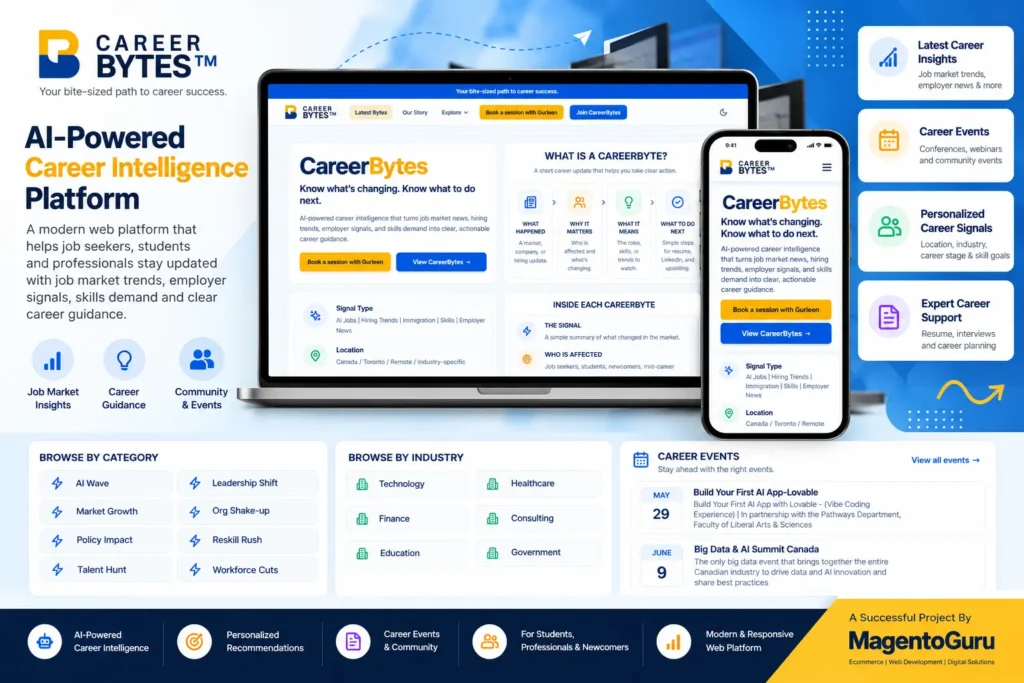
CareerBytes transforms job-market news, hiring trends, employer signals, skills demand, industry changes, and career insights into concise, actionable career information.…
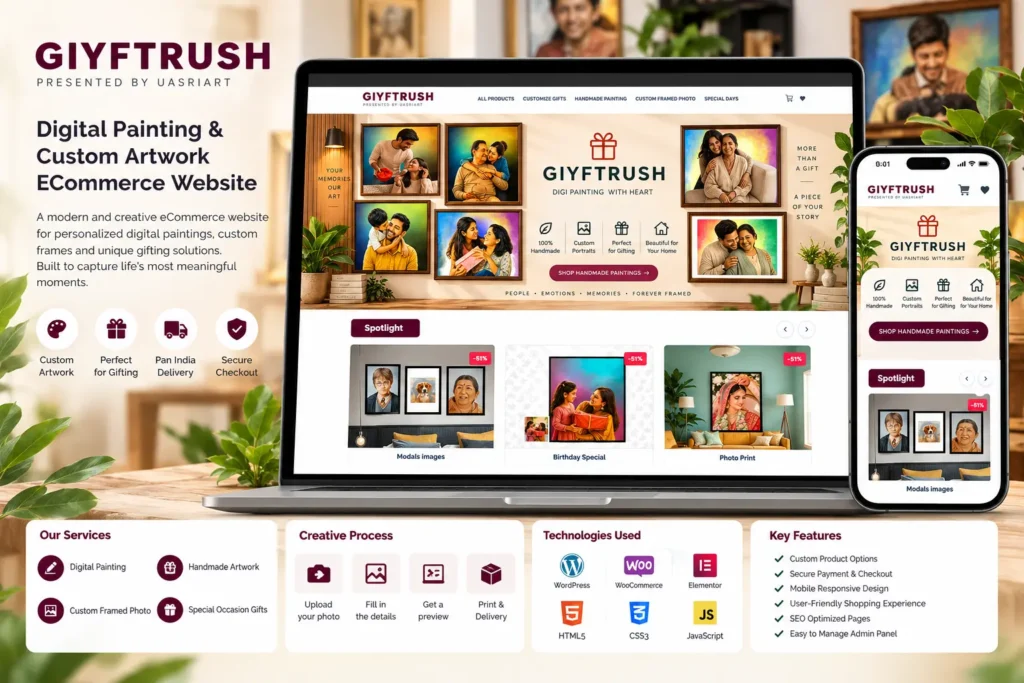
Giftrush is a custom WooCommerce eCommerce platform developed for personalized gifts, digital paintings, custom artwork and framed photo products. The…
 Custom